
Guess The Drawing
Supersonic Studios LTDTrivia
4.5324.00 Reviews
- Version
- 2.4
- Installs
- 10.00M
- Age Rating
- Everyone
Screenshots
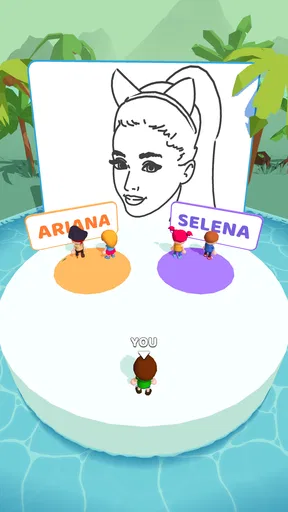
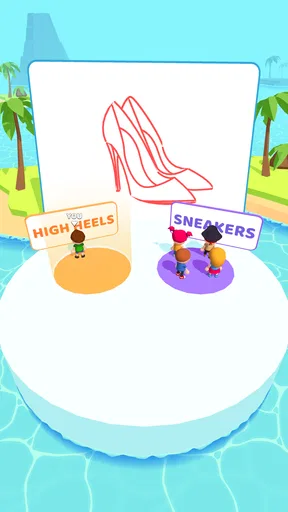
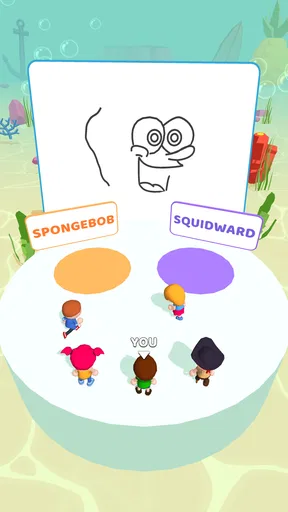
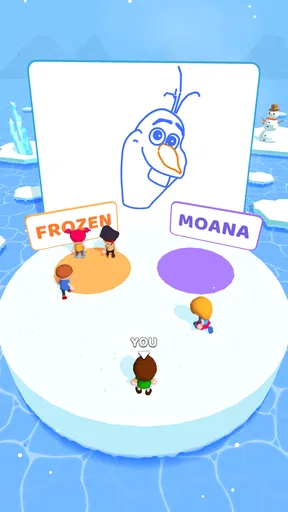
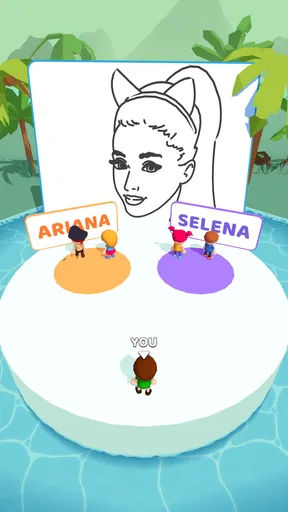
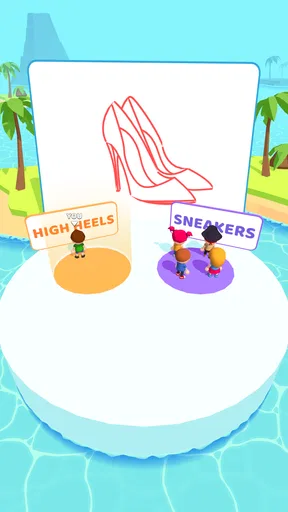
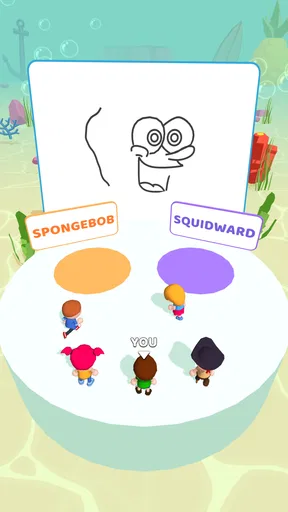
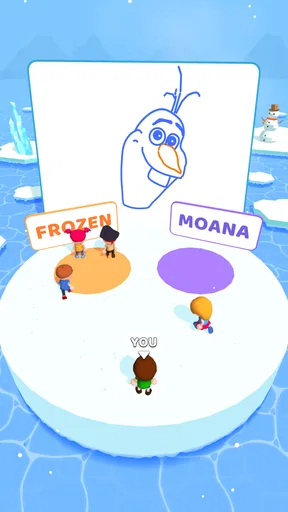
Our Review of Guess The Drawing
 Analysis by Appyee
I found Guess The Drawing most interesting when I stopped treating it like a conventional quiz and started viewing it as a quick visual challenge. The basic idea is easy to understand: identify what a drawing represents, keep making the right guesses, and try to remain the last player standing. That simple setup makes it approachable for short sessions, although it also means the experience depends heavily on how comfortable you are with fast visual interpretation.
This is a free trivia game from Supersonic Studios LTD, rated for Everyone. It has reached over 10 million installs and holds a 4.5 average from around 20 thousand ratings, so it clearly appeals to a broad audience. I can see why: there is no complicated rulebook to study before beginning, and the premise can be explained to another person in a few seconds. Still, its simplicity is not the same as universal ease. The way a player reads the screen, reacts under pressure, and handles visual ambiguity makes a real difference.
How the game communicates its challenge
I focus here on how the game signals what it expects from you: a quick look at a drawing, a reasoned guess, and enough confidence to stay in the contest. That visual-first approach makes the challenge easy to grasp, but it also shapes who finds the pace comfortable. From there, it helps to consider how that signal feels during an actual round.
Readability and navigation in quick rounds
The strongest part of the design is the immediate connection between the picture and the question. You are not asked to learn a large collection of menus or manage a complicated character. The focus stays on recognizing the drawing and deciding what it means. For someone who wants a lightweight trivia game rather than a long campaign, that directness is a genuine advantage.
I also think the short-session format works well for people who have limited attention or only a few spare minutes. A quick attempt can fit between daily tasks, during a break, or while waiting for an appointment. The game does not demand the kind of uninterrupted commitment associated with a large strategy title. That makes it easier to return to, especially when I want a small mental distraction instead of a major gaming session.
At the same time, visual guessing places a lot of weight on clarity. A drawing can be technically simple but still difficult to interpret if its shapes are crowded, its details are subtle, or the intended answer is not the first thing a player notices. This is not necessarily a flaw in the concept; ambiguity is part of the challenge. But it means the game may feel less readable to someone who needs strong contrast, larger visual elements, or extra time to process an image.
Navigation is best understood through the game’s limited scope. There are fewer layers to remember than in a trivia app built around large question banks, categories, profiles, and detailed progress screens. That keeps the mental load low. For a first-time player, the learning curve is mostly about understanding how the drawings are presented and how quickly answers need to be made, rather than learning a complicated interface.
One useful habit is to look at the drawing as a collection of broad shapes before searching for tiny clues. I found that this prevents me from locking onto an early guess based on one small mark. If the image seems unclear, I mentally describe its outline, position, and repeated elements first. That approach is particularly helpful for players who become overwhelmed when a visual puzzle is presented as one undifferentiated picture.
Motor and sensory considerations
The game’s appeal for motor accessibility comes from its straightforward interaction. It is not built around steering, rapid character movement, or a complicated sequence of gestures. The central action is choosing an answer, which should feel more manageable than games that require continuous precision. For many players, that makes it a less physically demanding option within mobile gaming.
However, the competitive structure can still create pressure. A player may know the answer but hesitate, mis-tap, or need more time to visually confirm it. That distinction matters: the challenge is not only knowledge. It also involves seeing the drawing, interpreting it, and responding before the opportunity disappears. Someone with slower motor responses may therefore experience the game differently from someone who can make quick, confident selections.
Players with visual sensitivities should approach it with realistic expectations. The entire premise depends on looking closely at changing drawings, and repeated visual comparison can become tiring. I would recommend lowering the screen brightness to a comfortable level, taking breaks between attempts, and avoiding long sessions if visual concentration starts to feel strained. These are practical habits rather than special game features, but they can make the experience more comfortable.
For players with color-vision differences, the important question is whether the drawing can be understood from its shape and arrangement rather than color alone. In my view, the safest strategy is to focus first on outlines, proportions, and recognizable objects. If a particular puzzle seems to depend on a color distinction, it may be more frustrating than a puzzle whose meaning is carried by form. That variation is one reason I would not describe every round as equally accessible.
Hearing is less central to the core premise than sight, because the answer is represented visually. That is a positive point for someone who prefers not to rely on spoken instructions or audio cues. Even so, I would not assume that every surrounding signal is equally useful without checking the game personally on the device being used. The essential task is visual, but the overall comfort of a session can still depend on how clearly the phone communicates changes in play.
Using it in everyday situations
A realistic use case is a short group session at home. One person can pass the phone around, and everyone can offer a guess without needing a long explanation of the rules. Younger players can understand the premise quickly, while adults may enjoy trying to interpret deliberately simplified images. Because the content rating is Everyone, it is positioned for a broad audience, although individual puzzle difficulty can still vary from person to person.
I can also imagine using it alone when I want something more active than scrolling but less demanding than a full-length game. The drawing format gives the brain a small problem to solve, and the last-player-standing idea adds a reason to stay focused. It is a better fit for a quick mental warm-up than for someone seeking deep trivia knowledge about history, science, or entertainment.
For a classroom, waiting room, or shared family setting, the main advantage is its low explanation cost. A teacher or parent would not need to introduce a complex fictional world before letting someone try it. The limitation is that the competitive pace may not suit every participant. If one person needs more time to inspect an image, the group may need to treat the game casually rather than turning every round into a strict contest.
The same point applies to social play between people with different levels of confidence. A fast guesser can dominate the atmosphere even when another player has equally good reasoning but slower response time. I would make the experience more inclusive by allowing everyone to discuss what they see before treating the result as a serious competition. That changes the emphasis from elimination to shared interpretation without requiring the game itself to change.
On a small phone, I would avoid playing while walking or in a moving vehicle. Visual guessing already requires attention, and a shifting environment makes it harder to inspect details. A stable seat, a comfortable viewing distance, and a screen that is not covered by glare are simple conditions that make a noticeable difference. These considerations are easy to overlook because the game looks casual, but the drawings are still the entire basis of play.
Where it differs from ordinary trivia alternatives
Traditional trivia apps usually test recall. They ask whether you know a fact, recognize a name, or remember a date. This game tests interpretation instead. You may reach the right answer without having learned any new information, simply by noticing how a drawing represents an object or idea. That makes it more approachable for players who do not enjoy knowledge-heavy quizzes.
The trade-off is that it offers less control over subject matter than a category-based trivia experience. If I specifically want questions about geography, music, or science, a conventional quiz app is a better choice. Here, the entertainment comes from the visual puzzle and the pressure of staying in play, not from building a structured knowledge base.
It also differs from drawing tools and creative sketch games. The player is not primarily rewarded for artistic technique or for creating a polished image. The important skill is recognizing intent. Someone who dislikes drawing may still enjoy this, while someone looking for free-form creativity may find it too restricted.
Compared with a relaxed puzzle game, the last-player-standing format adds urgency. That can make a familiar object feel surprisingly difficult when the clock or competition changes how I think. It is a strength for players who enjoy tension, but a weakness for anyone who prefers to examine every clue without consequence. Choosing between this and a slower alternative depends less on intelligence than on the kind of pressure you find enjoyable.
Practical friction and remaining barriers
The free entry point is helpful, especially for families or casual players who want to test the concept before committing. The game is listed as free, while in-app purchases are shown at $2.99 per item. I would keep that in mind if a child is using the device, not because the basic premise is difficult to understand, but because any optional purchase system deserves adult awareness on a shared phone or tablet.
The current version is 2.4, and the minimum operating system is Android 7.0. That makes the technical entry requirement relatively familiar for many Android users, though device compatibility is still something to check before planning a group activity. An older phone may also make small visual details harder to inspect, even if the operating system itself is supported.
One of the game’s biggest barriers is not a menu or a payment; it is interpretation. A player can understand every rule and still struggle because the drawing does not immediately communicate its subject. This is especially relevant for people with dyslexia, visual-processing differences, attention difficulties, or limited familiarity with the object being represented. I would not treat a wrong answer as proof that the player misunderstood the game.
Another barrier is uneven group ability. In a mixed-age setting, younger children may recognize familiar cartoon-like forms quickly but need more time with abstract representations. Older players may have broader visual associations but can also overthink a simple image. A fair session works better when players are encouraged to explain their reasoning and when speed is treated as only one part of success.
There is also a difference between accessible interaction and accessible content. Selecting an answer may be physically simple, yet the drawing itself may remain hard to distinguish. That is why I see the game as approachable rather than universally accessible. It lowers the complexity of the controls, but it cannot remove the visual demands at the heart of its design.
Who should try it, and who should skip it
I would recommend it to players who enjoy fast visual puzzles, casual competition, and games that can be understood without a long tutorial. It is particularly suitable for a family member who wants a quick challenge, a friend who prefers image-based reasoning to fact recall, or anyone looking for a small game to fill short gaps in the day.
I would be more cautious about recommending it to someone who needs generous response time, finds ambiguous drawings stressful, or wants a predictable set of academic trivia categories. A slower puzzle game may be kinder for careful thinkers, while a standard quiz app may offer more meaningful progress for someone trying to learn facts. This title is about reacting to representations, not studying a subject.
For the best experience, I would play in a well-lit but glare-free place, hold the phone steadily, and treat the first few rounds as a way to learn how the drawings communicate. In a group, I would agree beforehand that players can discuss confusing images rather than making speed the only measure of ability. If the visual pace becomes tiring, shorter sessions are more sensible than forcing a long run.
A balanced verdict on inclusive play
My overall view is that Guess The Drawing makes a sincere effort to keep the basic interaction approachable, but its visual guessing and competitive timing remain meaningful barriers for some players. The simple premise, free starting point, Everyone rating, and large audience make it easy to recommend as a casual experiment. Supersonic Studios LTD has chosen a format that can bring together people who might not normally enjoy the same kind of trivia.
I like it most when the goal is shared amusement rather than a serious test of speed. The game works well as a quick conversation starter, a short solo distraction, or a light family challenge. Its strongest quality is that it asks players to look at an ordinary representation in a slightly different way.
My final recommendation is conditional but positive: try it if you enjoy visual interpretation and can comfortably handle quick decisions. Keep sessions short, use a stable viewing setup, and do not confuse slower responses with weaker reasoning. If you need high control over pacing, detailed subject categories, or a less visually dependent format, another trivia or puzzle option will probably serve you better.
Privacy and Permissions
See what permissions an app requests and how it handles your data.
- Phone
- read phone status and identity
- Wi-Fi connection information
- view Wi-Fi connections
- Device ID & call information
- read phone status and identity
- Other
- view network connections, full network access, control vibration, prevent device from sleeping, Google Play license check
Verdict
Strengths of Guess The Drawing
- Simple rules make it easy for anyone to start playing.
- Quick rounds are ideal for short gaming sessions.
- Drawing challenges encourage creativity and imagination.
- Suitable for playing casually with friends or family.
- Lightweight gameplay works well on most mobile devices.
Limitations of Guess The Drawing
- Some prompts may feel repetitive after extended play.
- Guessing accuracy can vary with unclear or rushed drawings.
- The experience may become less engaging for solo players.
- Ads may interrupt the flow between rounds.
- Limited challenge depth may not satisfy experienced players.
Other Releases by Supersonic Studios LTD
View All


Similar Picks in This Category
View All
Millionaire 2026 Quiz & Trivia
Quiz & Trivia Games by Submarine Apps4.5

Brain Test 2: Tricky Stories
Unico Studio4.7

Trivia Crack: Brain Quiz Games
etermax4.4

QuizzLand. Quiz & Trivia game
Quiz & Trivia Games by Mno Go Apps4.8

Brain Test: Tricky Puzzles
Unico Studio4.7

Logo Quiz
bubble quiz games4.5
Frequently Asked Questions
What is Guess The Drawing and how does it work?
Guess The Drawing is a casual puzzle game based on recognizing simple sketches. A drawing appears on the screen, and your task is to identify the object, animal, place, or idea it represents by selecting or entering the correct answer. The game usually begins with easy images and gradually introduces more challenging drawings, making it suitable for short play sessions and relaxed entertainment.
Is Guess The Drawing free to download and play?
Guess The Drawing can generally be downloaded and played without an initial payment, although the exact free content may depend on the version available for your device. Like many casual games, it may include advertisements, optional in-app purchases, or paid items such as hints and ad removal. Check the store listing before downloading to confirm current pricing and purchase conditions.
Does Guess The Drawing require an internet connection?
The basic guessing gameplay may work without a constant internet connection, which is useful when traveling or playing in places with limited coverage. However, some features may require online access, including advertisements, purchases, synchronization, updates, leaderboards, or additional content. Availability can vary by version, so it is best to launch the game once online before relying on offline play.
Is Guess The Drawing suitable for children and families?
Guess The Drawing is generally easy to understand and can be enjoyable for children, teenagers, and adults because it focuses on visual clues rather than complicated controls. Parents should still review the recommended age rating, advertising policy, and in-app purchase settings. Some answers may become difficult for younger players, but the game can also work well as a family guessing activity.
What should I know about hints, difficulty, and progress?
When a drawing is difficult to recognize, the game may offer hints or other assistance, sometimes in exchange for earned points, virtual currency, or a rewarded advertisement. Difficulty normally increases as you advance, so progress is designed to test both observation and general knowledge. Before spending resources, consider saving hints for genuinely challenging levels, since they may be limited.
Play our best games!


